
23 Loose Parts Ideas for Early Childhood Math
Discover 23 loose parts math ideas for early childhood classrooms. Hands-on math activities using loose parts to teach counting, patterns, measurement, geometry and number concepts.
This blog post has 23 inspirational loose parts ideas for your early childhood classroom math learning provocations. I’m a big fan of using loose parts in my play based learning classroom and after you check out all these ideas, I’m sure you will be too!

Loose parts are open-ended materials which can be creatively explored by children. They can be natural or man-made. Any size, colour, and shape.
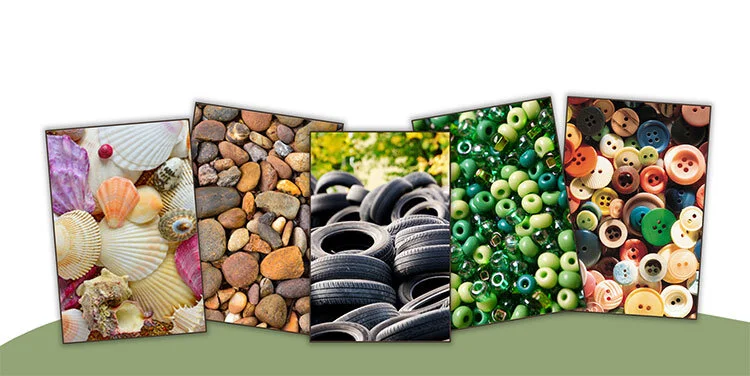
You can read more about loose parts in general HERE – Loose Parts Resources

Loose parts are essential for teaching maths in a hands-on play-based way.
New to Loose Parts Play? Start Here
If you’re just getting started with loose parts play and wondering how to set it up in your classroom, I have a FREE Educator’s Guide to Loose Parts Play that explains everything step-by-step and gives you practical ideas you can use straight away.
👉 Download the Free Loose Parts Guide Here
What are the Benefits of Loose Parts Play?
Loose parts have many benefits for developing math skills and concepts. In fact, loose parts play is beneficial across the entire curriculum and is not limited to only learning maths. Loose parts play is a cross-curricular/integrated activity because so many varied skills will be present in any one learning experience.
When you give your children the opportunity to explore loose parts, you will notice your children observe, enquire, investigate, construct, deconstruct and engage with both others and the world around them. You will also observe them practicing vital skills as they apply their learning to their play.
If you would like to learn more about the many benefits of loose parts play, you might like this blog post - Benefits of Loose Parts Play.

What are Some Examples of Loose Parts?
Loose parts can be sourced from the natural world or they can be man-made. They can be large or small. If you want to encourage mathematical thinking, try to offer loose parts with differing attributes of size, colour and shape.
You can collect loose parts from inside and outside your classroom. Consider items like small toys, rocks, shells and bottle caps. They all make great loose parts.
Math manipulatives are perfect for inviting children to develop and practice the key ideas and understandings of the math curriculum. You probably already have a good selection of suitable loose parts in your math resource area.

If you are interested in collecting some loose parts for your classroom, you can download a full list of over 150 ideas for open-ended loose parts HERE in my Free Resources library.
This comprehensive list includes cheap and often free loose parts you can easily collect for purposeful loose parts play.

Using Loose Parts Play for Learning Maths
Loose parts play is perfect for developing math skills and understandings. When you offer children a selection of loose parts they will naturally practice and extend their math thinking. As they explore and manipulate the resources they will create patterns, sort and count them.
If you want to extend their thinking you can use prompts like these open-ended math prompts.

These Reggio inspired open ended math question prompts on nature photos will encourage mathematical thinking, teach math skills, develop mathematical vocab AND enhance your classroom decor.
PERFECT FOR:
hands-on math investigation areas
play based math centres
whole class or small group math inquiry lessons
a circle time math prompt
STEM boxes or trays
busy bags (add a prompt to a collection of loose parts or math resources)
YOU WILL RECEIVE A .pdf file containing 26 beautiful open-ended MATH question prompts ON NATURE PHOTOS
Each prompt is designed to be printed on A4 paper or card. Instructions are included to tile print them if you would like them to be a smaller size. I recommend printing them at a high quality to achieve the stunning quality.
Use these cards to prompt your questioning when interacting with your children.
They will help your children to verbalise their thinking and challenge them to think about math in different ways. You will learn so much when you use these cards to invite the children to share their mathematical thinking.
Easily prepare and set up aesthetically pleasing and educational math investigation areas by including one or two of these open-ended math question prompts.
These posters will help you and other educators in the room to take your student's mathematical thinking to the next level.
These Reggio inspired math prompts will encourage mathematical thinking, teach math skills, develop mathematical vocab AND enhance your classroom decor.
They are perfect for hands-on math investigation areas and loose parts play. I love these open-ended questions to prompt my questioning and help me to scaffold math learning with children exploring loose parts.
They will help your children to verbalise their thinking and challenge them to think about math in different ways too. Open ended questions will help you understand what your children are thinking as they play with the loose parts. I learn so much about my children and their developmental level when I use these cards.

When you observe your children playing with loose parts you will see them developing and practising important numeracy skills and concepts like: connecting number names and quantities, patterning, counting, subitising, matching, sorting and classifying, comparing and ordering collections, estimating, measuring, exploring shapes and position and location.
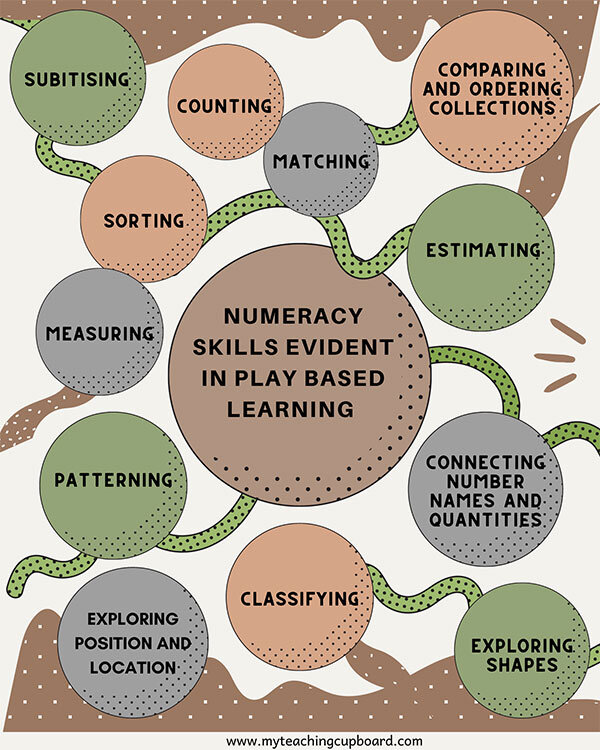
As your children develop and practise their mathematical skills in loose parts play, they will gain a deeper understanding of numeracy. Loose parts are an essential component of authentic mathematical learning in any early years classroom.
Problem Solving Skills
As children play and manipulate loose parts, they will be developing their problem solving skills. They will test and hypothesize, evaluate and re-test.
There will always be obstacles to overcome and problems to solve for children playing with loose parts. Young children enjoy experimenting with loose parts and will develop their problem-solving skills through trial and error.
STEM Education
Higher order thinking is a focus in every curriculum and with every age group. You can definitely enrich the academic and social learning in your classroom through STEM challenges.
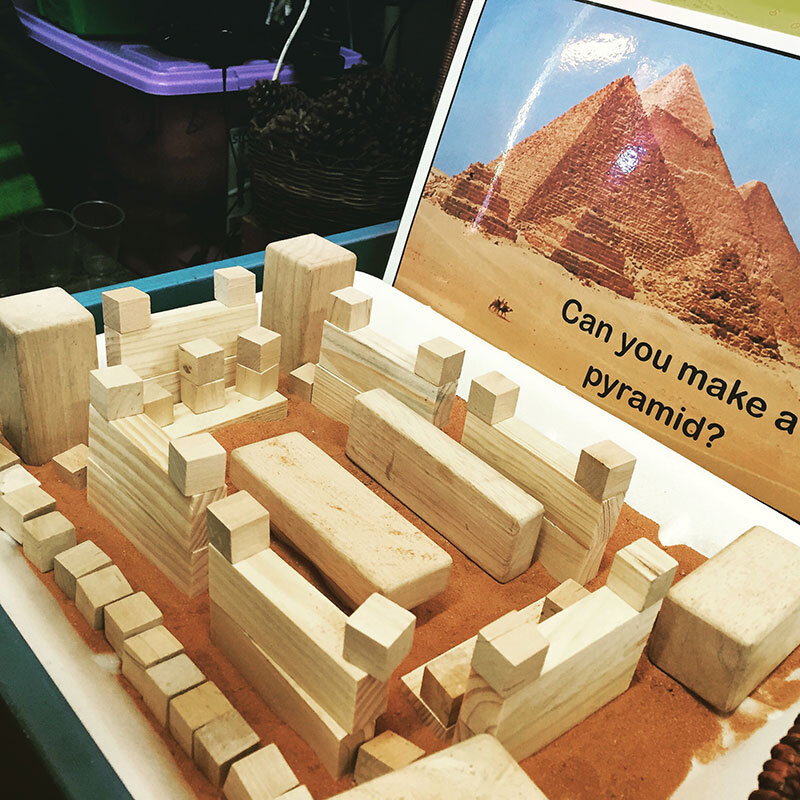
Loose parts are the perfect resource to add to a stem challenge. Just add a prompt and a few loose parts and you will have an easy to set up and educational STEM challenge
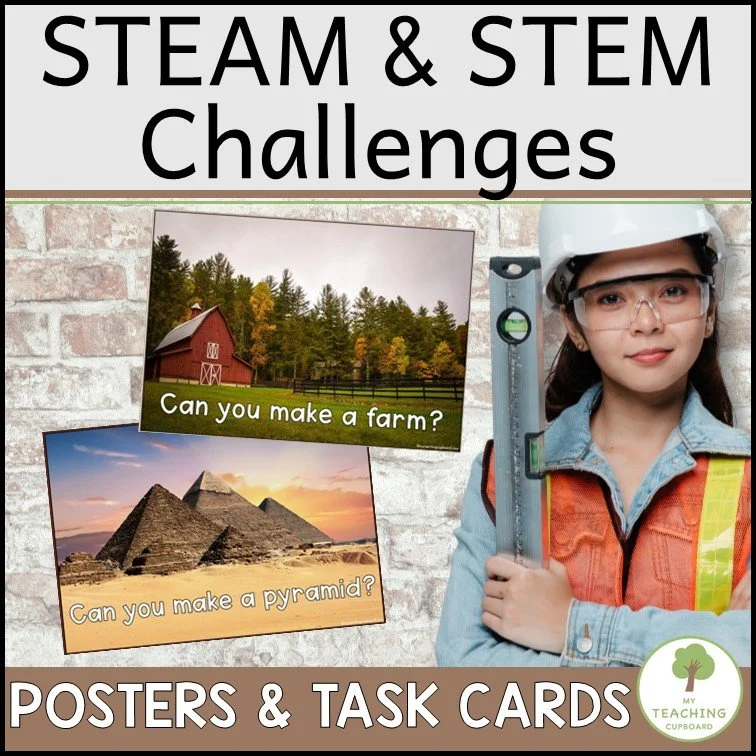
Need a better way to teach STEM without spending hours planning?
Want meaningful, hands-on learning that builds thinking skills and fits inside a play-based classroom?
These STEM & STEAM provocations were designed to give you back your time - while still challenging your students to think critically and creatively.
I created these open-ended task cards out of frustration. I wanted my students to develop their problem-solving skills, but I couldn’t keep up with designing new challenges every week. I needed something purposeful that aligned with our curriculum but didn’t require heaps of prep. Something that worked just as well during investigation time as it did during a whole-class lesson. So I made these. And I’ve used them ever since.
Save Time With Print-and-Go STEM Challenges
You don’t need to reinvent the wheel to bring real-world STEM into your classroom.
This collection of STEM and STEAM challenges make planning and setup easier, because:
They work with materials you already have in your classroom (think construction kits like lego, blocks, paddle pop sticks and paper scraps)
You can use them as a STEAM provocation in a learning area or a whole-class mini lesson
They are low-prep and flexible - just print and display!
No more scrambling for ideas during your next planning session or wasting time designing a complicated challenge. These prompts are ready when you are.
Designed With Real Preschool and Kindergarten Classrooms in Mind
I’ve tested these with small groups, the whole class, and during inquiry-based play.
They work because:
The prompts are open-ended and developmentally appropriate
They encourage collaboration, design thinking, and creativity
They support the engineering design process, early exposure to STEM concepts, and oral language development
And because each child brings something different, the prompts are innately differentiated!
This STEM & STEAM Provocation Pack Includes:
36 open-ended challenges in 2 sizes (poster + task card)
A Student planning sheet
2 student reflection and recording sheets
Task Card Box and Document Wallet labels to keep everything organised
Your students will:
Practice critical thinking, teamwork, and higher-order thinking.
Tinker, test, and problem-solve using everyday objects.
Engage with real STEM concepts through a fun, hands-on way that still feels like play.
And you’ll feel:
More prepared and less overwhelmed.
Confident that your activities are purposeful and aligned to curriculum outcomes.
Excited to teach STEM because you’re not planning from scratch every time.
Let these STEM provocations become your new favourite time-saving tool - and a go-to resource you’ll reach for all year!
I designed these 30 STEAM cards as stimulus prompts for children exploring concepts in Science, Technology, Engineering, Art and Math (STEAM). These inviting prompts will help your children develop their higher order thinking skills by challenging them to think both creatively and critically.
They are the perfect prompts to add to a provocation or investigation area. If you have a particular math curriculum objective in mind, you can offer specific materials and loose parts to build with.
For a quick and easy STEM challenge, I will simply invite the children to choose their own building material from our classroom loose parts resources.
23 Loose Parts Ideas for Early Childhood Math
Geometry Ideas using Loose Parts
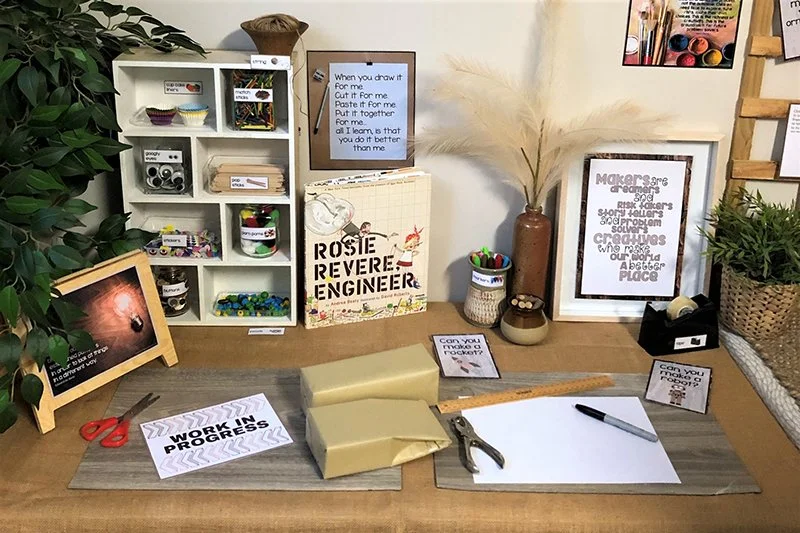
1. 3D Shapes at the Makerspace
Box construction is beneficial for all ages to explore STEM concepts and develop creativity. Using recycled loose parts like old boxes and tubes to create imaginative constructions will teach your children problem solving and mathematical skills like estimating and measuring, spatial awareness, sorting and counting to name a few.
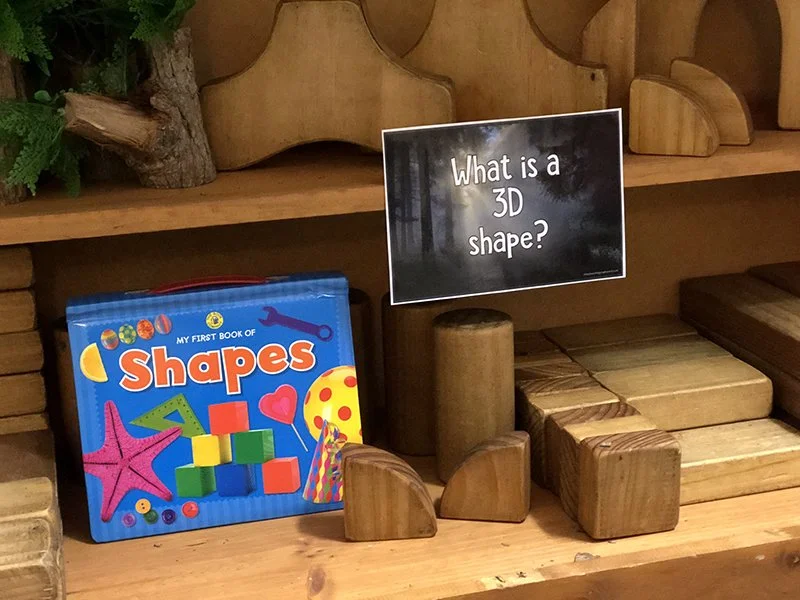
2. 3D Shapes at the Blocks Area
So much math happens in the blocks area. It’s one of the reasons block play is so important in any early years classroom. Children will solve mathematical problems and develop math skills like estimating and measuring, spatial awareness, sorting and counting
Adding prompts like the one in this picture can help focus the children’s loose parts play on particular math learning related to your curriculum.
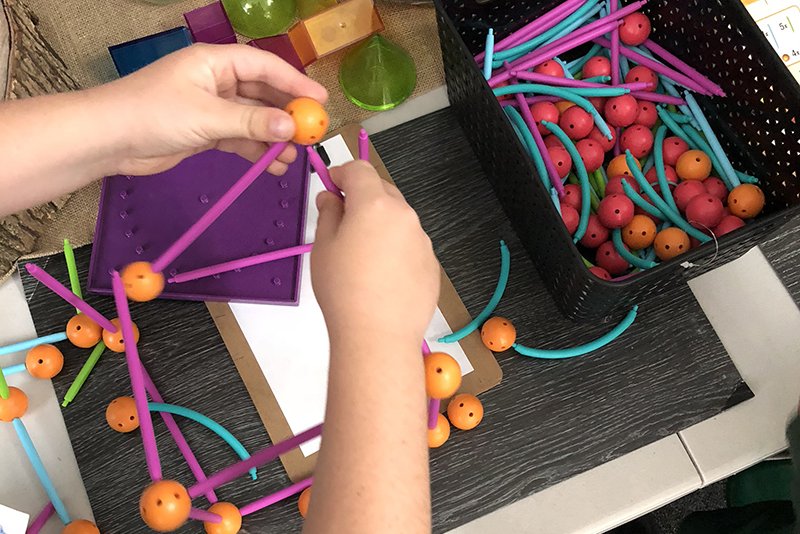
3. 3D Shapes at the Tinkering Table
Open-ended construction kits like lego and the one picturede here are another way loose parts can be used to develop creativity and problem solving skills. Again mathematical skills like estimating and measuring, spatial awareness, sorting and counting will be developed through this type of loose parts play.
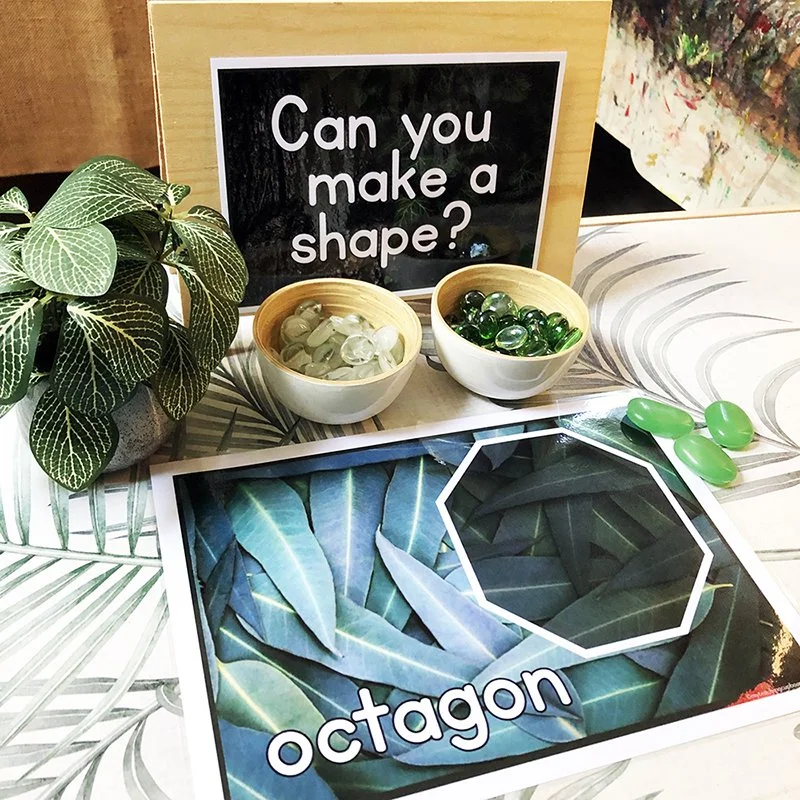
4. 2D Shapes Loose Parts Mats
Adding printable loose parts mats to your loose parts play will encourage children to explore and learn about common and uncommon 2D shapes in a play based and hands-on way.
5. Sorting Loose Parts
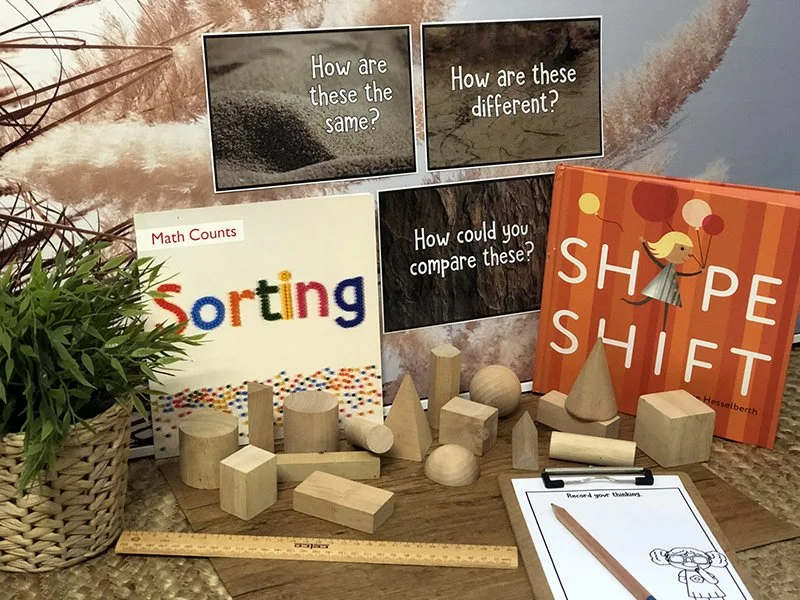
Whenever children are given the opportunity to play with and explore loose parts they will naturally sort them. You can encourage specific math curriculum learning intentions by providing specific learning prompts to your loose parts investigations.
For example, these specific learning prompts have been designed to teach the ACARA content descriptor: sort, name and create familiar shapes; recognise and describe familiar shapes within objects in the environment, giving reasons (AC9MFSP01)
You can grab my ACARA aligned Geometry Math Provocation Prompts HERE.

6. More Loose Parts Sorting
Math manipulatives like these are perfect for children learning to sort and count. This provocation was so easy to set up. Just a basket of math manipulatives and some sorting bowls is all you need to have your children sorting and counting.

7. Sorting through Loose Parts Play
This provocation was set up near the blocks area. It ties in nicely with the Living Things unit in Science too. When considering loose parts to offer your children, don’t just rely on the traditional math manipulatives.
Download my FREE list of over 150 loose parts you can collect for your classroom HERE in my free resources library. Open-ended loose parts like these farm animals can be used in all areas of your curriculum, not just in Maths.

8. Sorting Pom-Poms
Pom-poms make fantastic loose parts for sorting because they have 2 attributes - size and colour. This is another very quick and easy idea for loose parts math play. This prompt is another one from my printable Geometry Prompts pack.
9. Using Blocks to Teach Location and Transformation
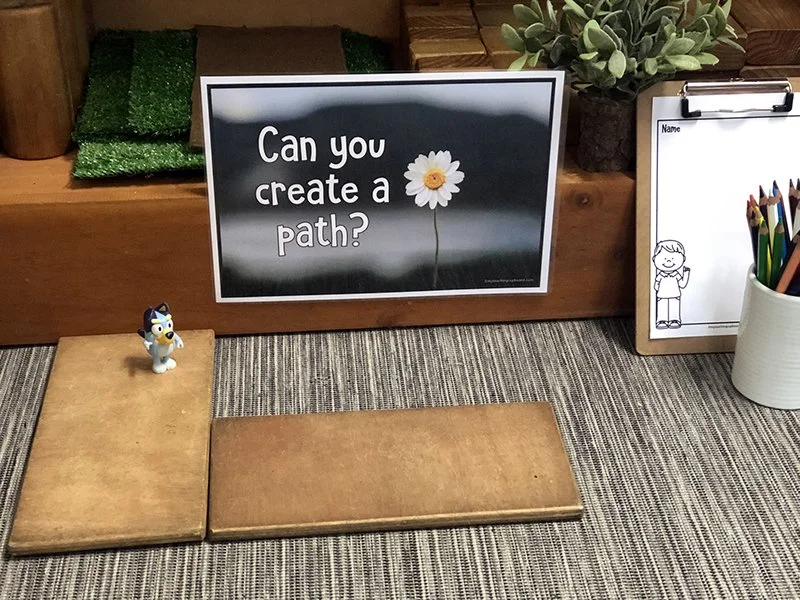
Creating a path is part of the Foundation stage Geometry curriculum. Adding cars or figures to the blocks area is the perfect invitation for children to create paths with blocks.
Other loose parts like wooden branch cookies, counters, glass stones and flat pebbles are other oose parts children enjoy using to create paths.
This prompt is available in my Geometry Math Provocation Prompts HERE.
10. Location and Transformation with Loose Parts
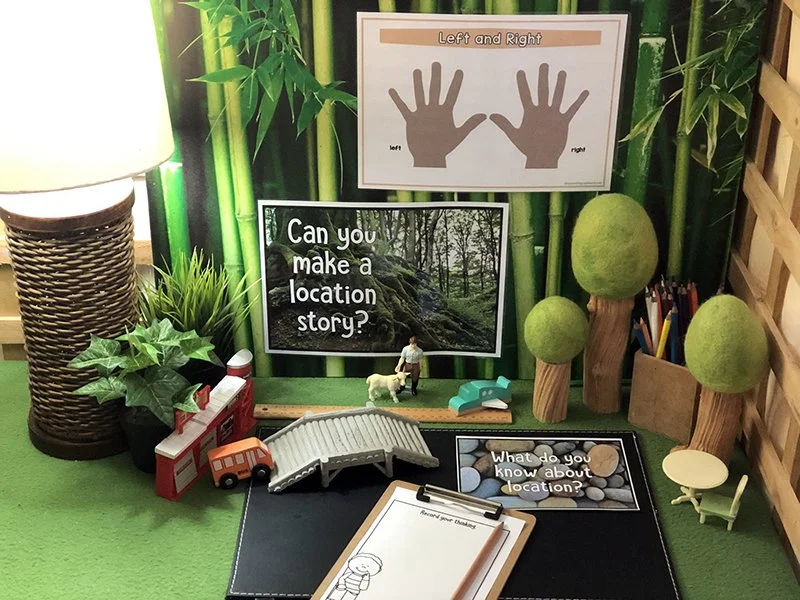
Small toys and props are some of our favourite loose parts in the early years classroom. Not as open-ended as counters and blocks but still used extensively throughout our learning invitations.
Very often these loose parts are part of our small world play invitations but they are also perfect for math provocations teaching about location and transformation.
These prompts and the left and right poster are part of my Geometry Math Provocation Prompts and printables HERE.
Measurement Ideas using Loose Parts
11. Loose Parts and Sensory Play
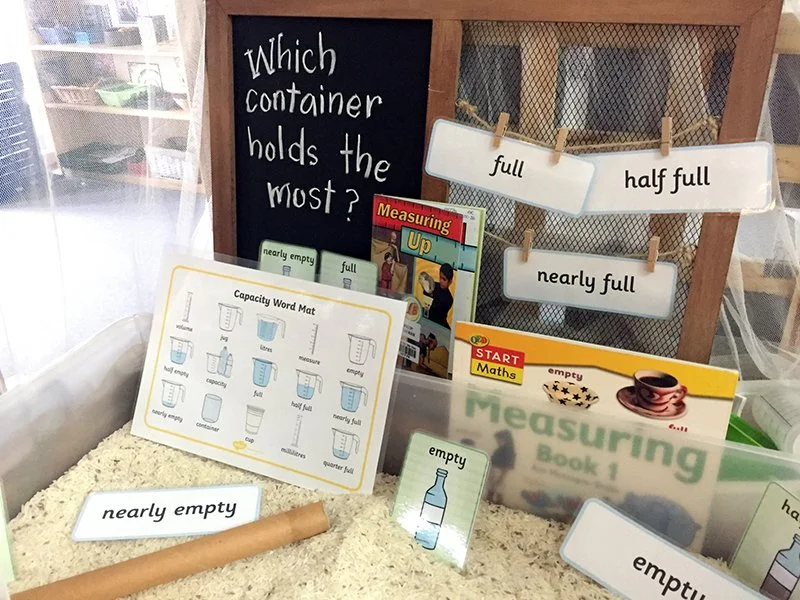
Did you know that sensory play bases like this rice are considered as loose parts?
Other loose parts offered in this invitation to measure capacity are a selection of measuring cups and spoons along with a variety of small and various sized containers.
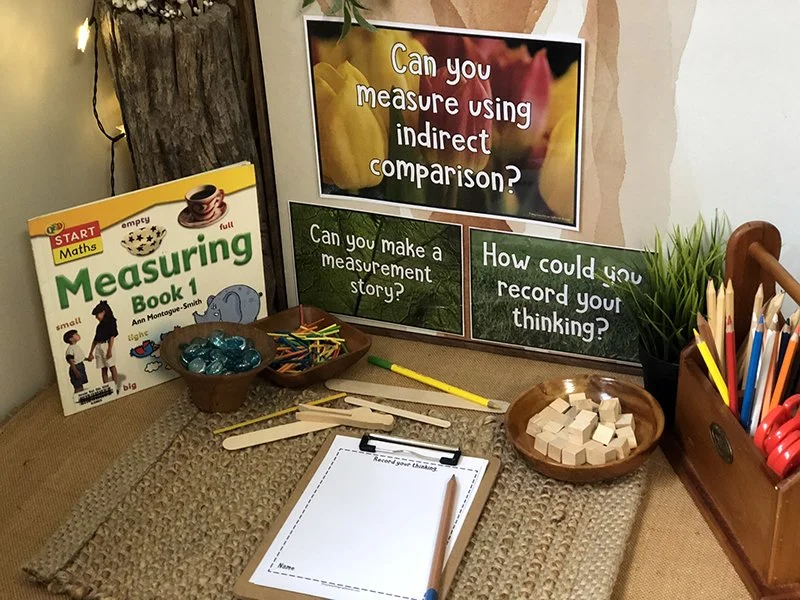
12. Measuring with Loose Parts
Loose parts can be the perfect standard measurement unit for children learning to measure using indirect comparison.
This learning invitation was set up to teach the ACARA content descriptor: identify and compare attributes of objects and events, including length, capacity, mass and duration, using direct comparisons and communicating reasoning (AC9MFM01)
The prompts used in this learning invitation are aligned to the ACARA Measurement content descriptors. You can grab the full Measurement set HERE.
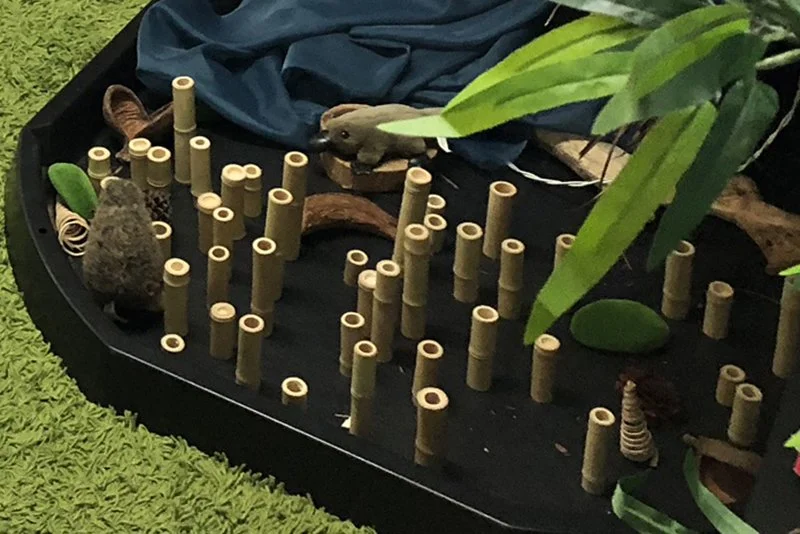
13. Measuring Height and Length
These loose parts are pieces of bamboo in different lengths. They were made by cutting up bamboo garden stakes. Open-ended loose parts like these are so versatile and can be added to any investigation area.
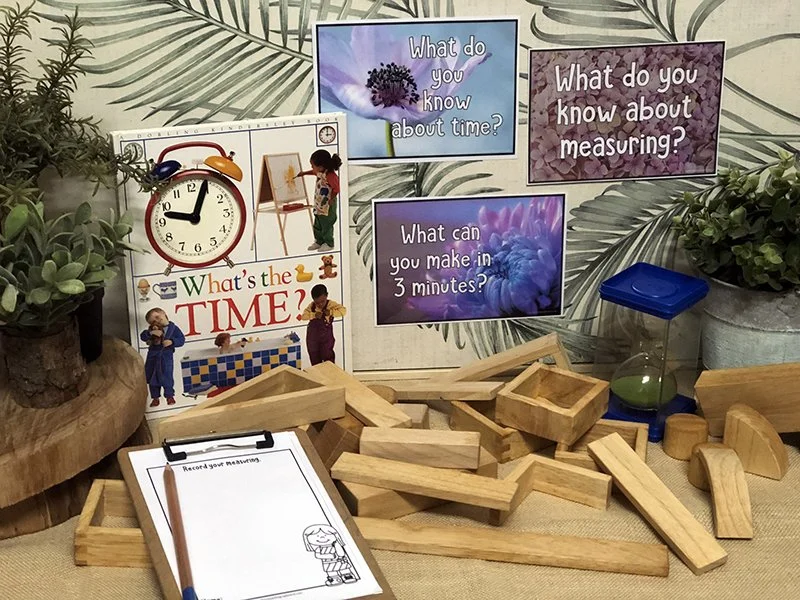
14. Time Concepts with Loose Parts
This learning invitation has been designed to teach the ACARA Measurement content descriptor: to sequence days of the week and times of the day including morning, lunchtime, afternoon and night time, and connect them to familiar events and actions (AC9MFM02)
Timers can be added to any loose parts to encourage children to explore concepts of time.
Grab these printable measurement prompts HERE. They are part of my printable Measurement Provocations Pack.

15. Loose Parts Playdough
Playdough is one of the most versatile of all loose parts. It helps children develop fine motor skills, creative thinking skills and is often used in our math provocations.
It is the perfect medium for exploring size and shape. It is also a safe and non-messy alternative for young children learning about weight and capacity.
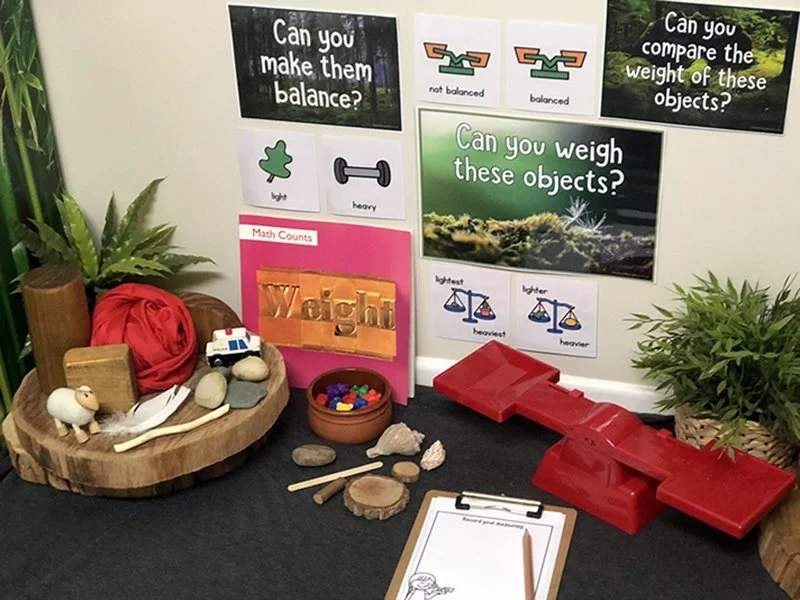
16. Weight and Loose Parts
A selection of loose parts and some balance scales creates a very engaging learning provocation designed for children to investigate balance and early concepts of measuring weight.
Make sure to include loose parts which can be used as standard units of measurement. Marbles, glass gems, unifix cubes, lego blocks and MAB blocks are all popular standard measuring units in our classroom.
Grab the Measurement Prompts used in this learning invitation HERE.
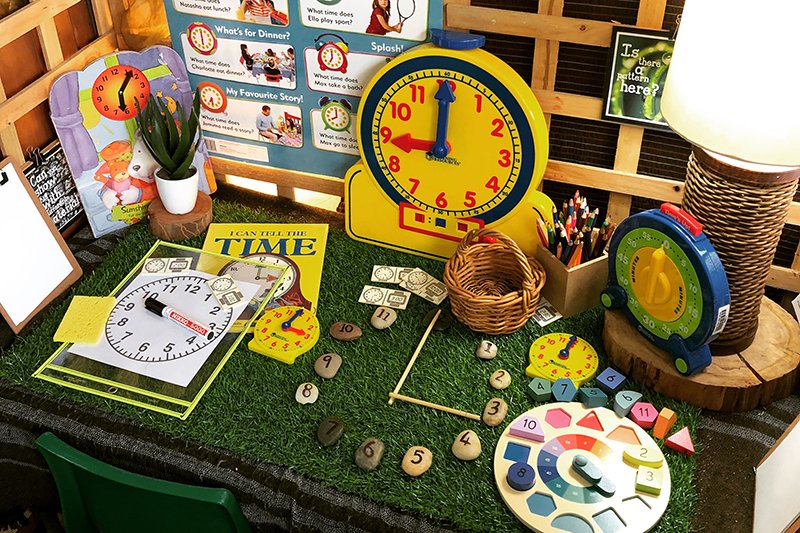
17. Time Provocation
The numbered stones used in this learning provocation are loose parts I often reach for in our Math investigation areas. I used a permanent marker to write the numerals onto each stone. They have stood the test of time (😉pun intended!!) and have been used over and over in many different math provocations.
Number and Algebra Ideas using Loose Parts
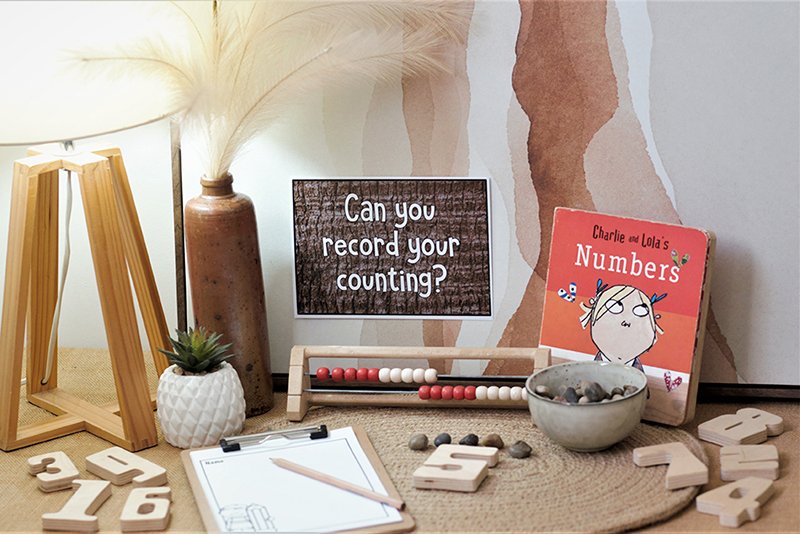
18. Numbers on Loose Parts
If you can write a numeral on it, if it already has a numeral on it or if it is a numeral in any way, shape or form - use it as a loose part in your math provocations.
Children will use numbered loose parts to order numbers, label collections, create numberlines, provoke counting, and develop their math vocabulary.
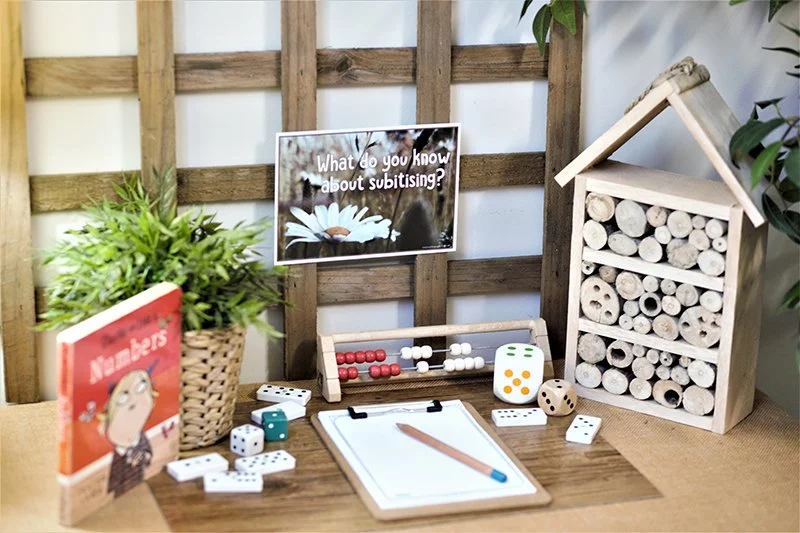
19. Subitising Loose Parts
Small loose parts, dominoes and dice are perfect for learning to subitise. Subitising is a very important math skill and helps children to develop a strong mathematical foundation in number and algebra.
This learning invitation was designed to encourage children to practice the skill of subitising. It is part of my printable Number and Algebra provocation prompts.
You can grab the full set of these math provocation prompts HERE.

20. Loose Parts in Dramatic Play Spaces
Loose parts are a great addition to any dramatic play space. Children will use them as props for food, money and anything their imagination desires. They will naturally count, sort and measure with them.
This prompt is another one from my Number and Algebra Provocation Prompts. There’s 88 math prompts to print in this pack HERE.

21. Loose Parts Number Provocation
Adding number posters and cards along with some number texts to your loose parts will provoke mathematical number investigations. You can leave this investigation area set up for a whole term - just change the loose parts offered there to create new interest and keep the children engaged.
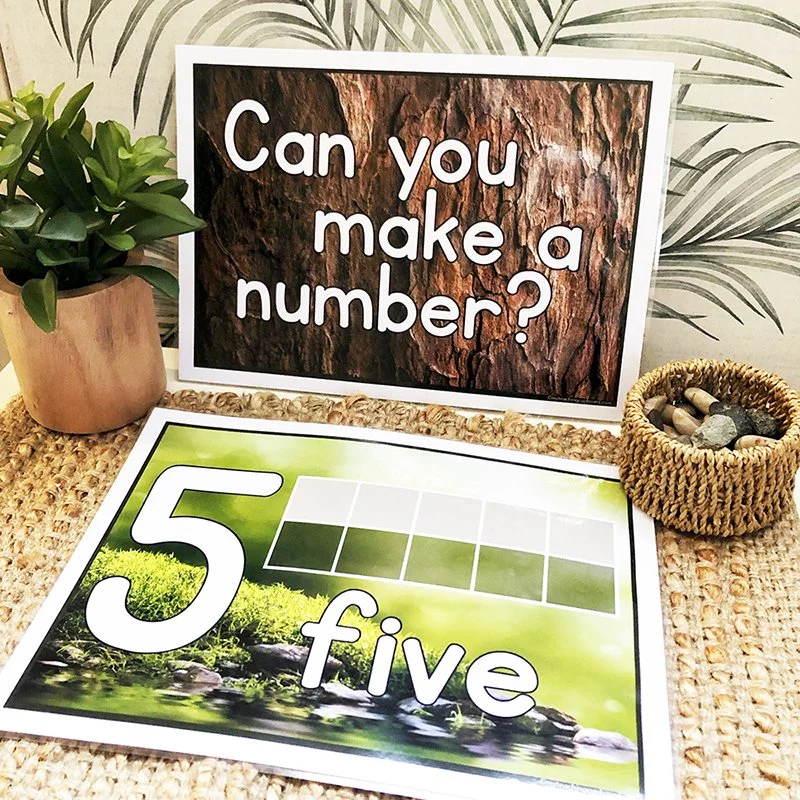
22. Loose Parts Number Mats
Adding printable loose parts number mats to your loose parts play will encourage children to explore and learn number concepts through hands-on loose parts play.
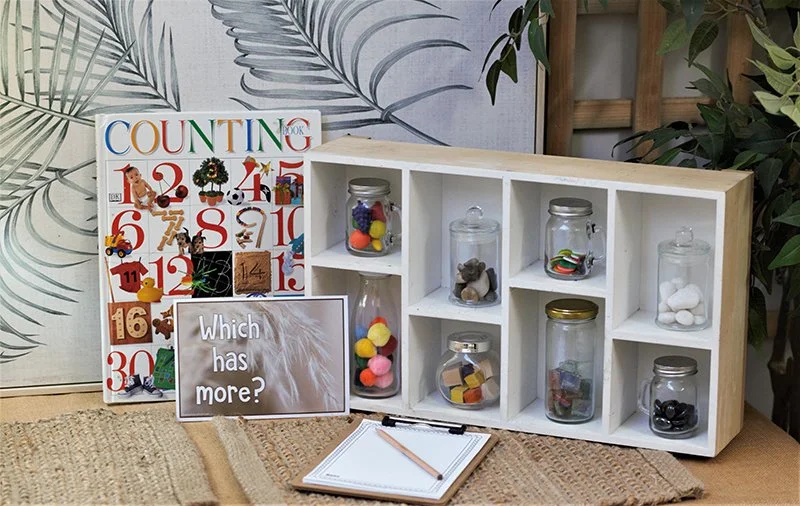
23. More and Less with Loose Parts
This learning invitation has been designed to teach the Math Number and Algebra content descriptor: quantify and compare collections to at least 20 using counting and explaining or demonstrating reasoning (AC9MFN03) using the loose parts offered at this learning invitation.
The prompts in my Number and Algebra Provocations Pack are all aligned to the ACARA Number and Algebra content descriptors. You can grab the full set of Number and Algebra Prompts HERE.
I hope you have gained some practical inspiration from these 23 loose parts ideas for math learning provocations. Are you a big fan of using loose parts in your play based learning classroom and excited by these ideas…
BUT you’re just not quite sure how to implement them consistently and effectively? I have a FREE Download guide to help you get started in a simple but manageable way.
👉 Download the FREE Guide to Loose Parts Play HERE
If you’re looking for more ways to use loose parts across your classroom, not just in maths, you might also enjoy this blog post: Loose Parts Play Ideas for Early Childhood Learning, where I share ideas for art, literacy, science, sensory play, dramatic play and outdoor learning all using loose parts.
If you found this blog post useful, others might too. Please consider sharing it…
Just CLICK the sharing box below.👇